

When you create a Multiple Choice question, you can choose to have one correct answer, or multiple correct answers (i.e. they are the same question type). Multiple choice and Multiple Answer questions are graded automatically.
Creating a Multiple Choice / Multiple Answer question
-
Click on the
icon and then click on Add Multiple Choice question.
-
Enter the question text.
Note: If you are including multiple correct answers, it is helpful to specify this in the question text as students will not see instructions on whether to select one or more answers.
-
In the Options area, list the possible answers. Place a check mark beside one or multiple correct answers.
-
Click on Add Option to add more answers if needed.
-
Make sure to select at least one correct answer and provide text for all answers before saving
-
You can add more answer boxes by selecting "Add Option" and delete unwanted answers using the trash can icon.
-
Choose a selection limit.
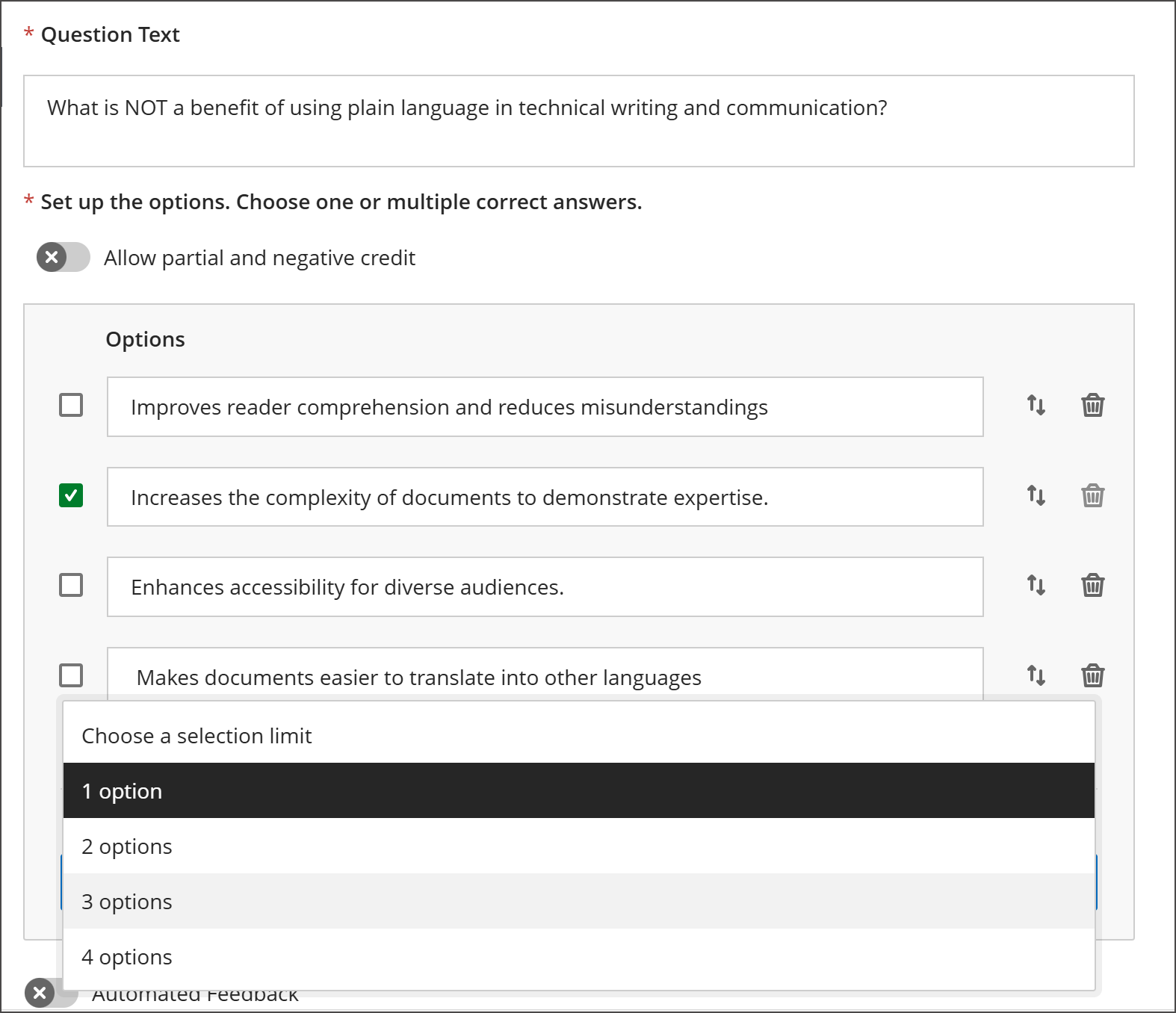
-
Remove any empty fields by clicking on the garbage can icon to enable saving.
Randomizing answers
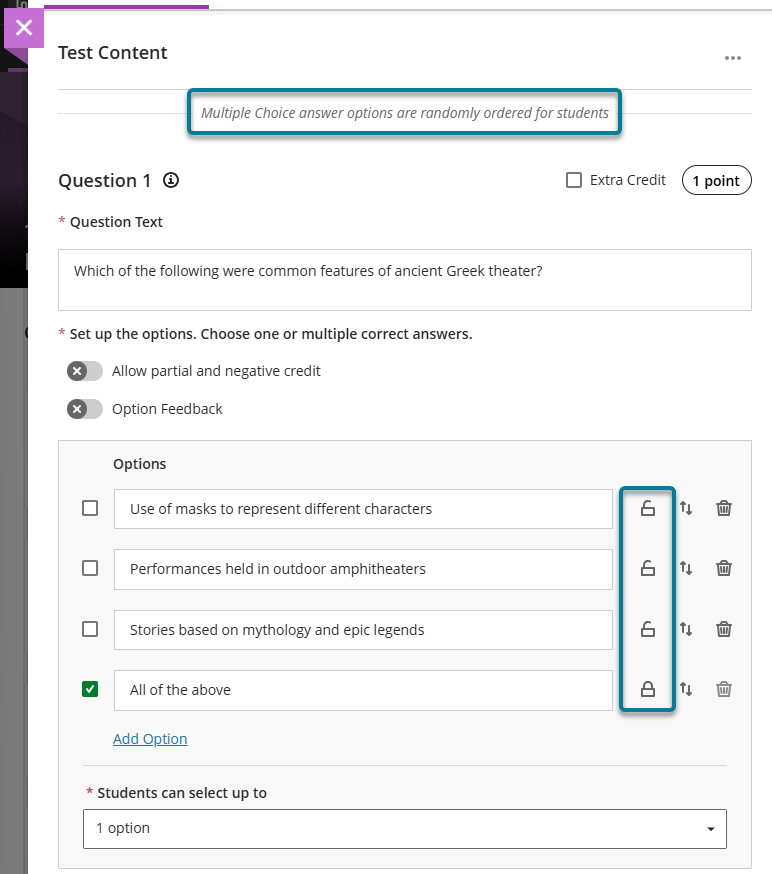
If you have selected Randomize answers in the Assessments settings, you can choose to lock the answer in place by clicking on the lock icon next to the answer. By default, all answers are unlocked and are indicated by an open lock.
This is helpful for questions that have “All of the above”, “None of the above” or the answer is “A or B”.
Allowing partial or negative credit for multiple answer questions
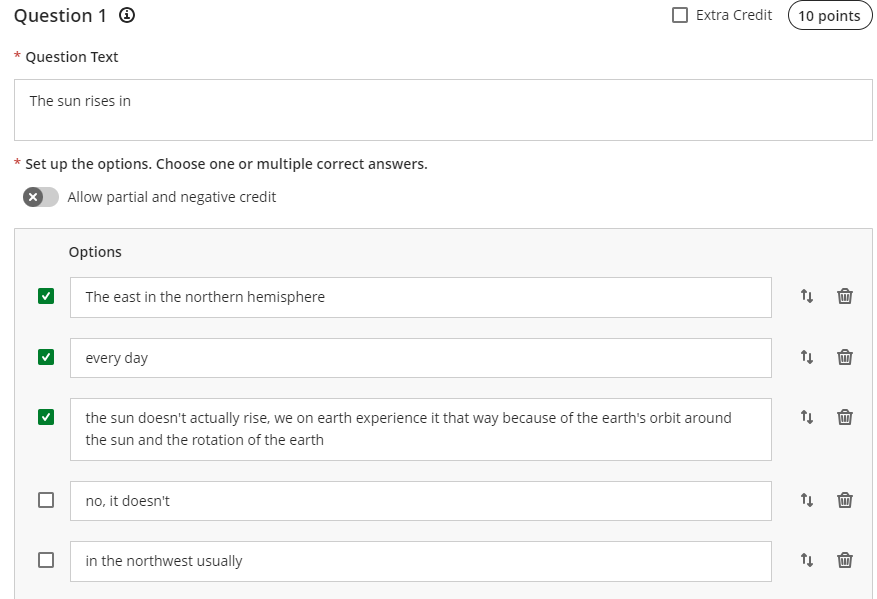
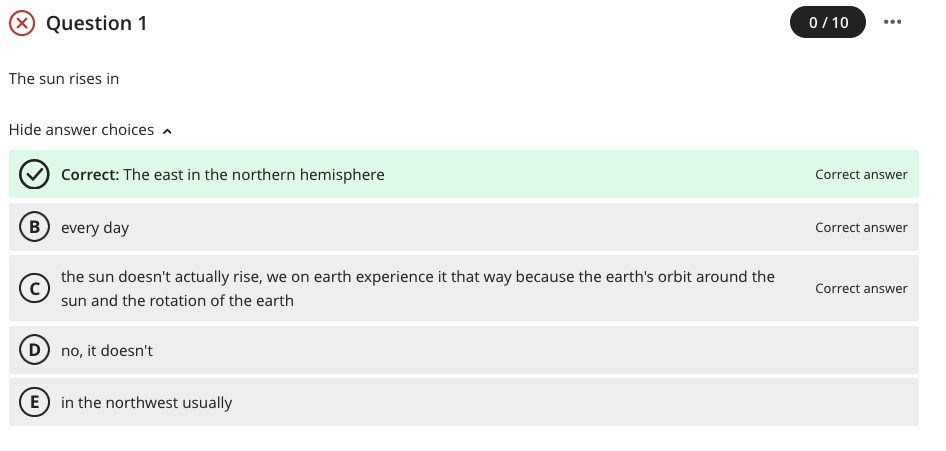
By default, questions with multiple correct answers are scored as ‘all or nothing’ - students must select ALL correct answers, and no incorrect answers to get any marks for the question.
Example of multiple answer question (no partial grades):
Allow partial or negative credit
-
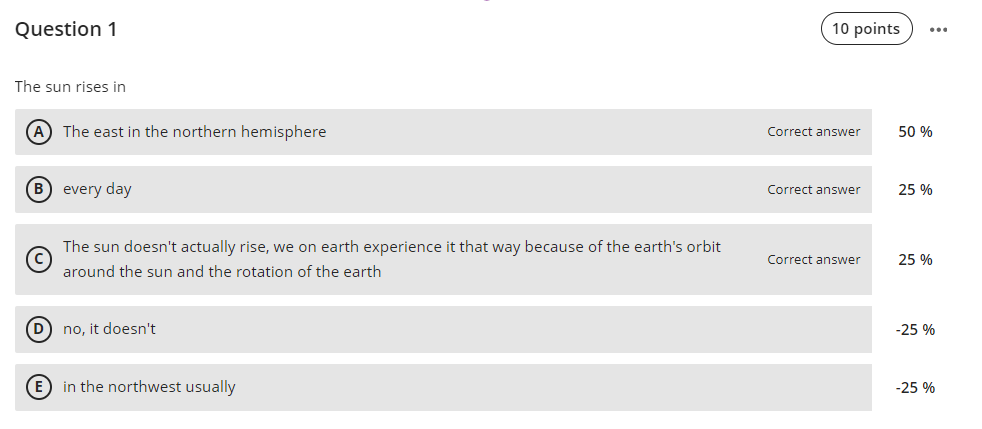
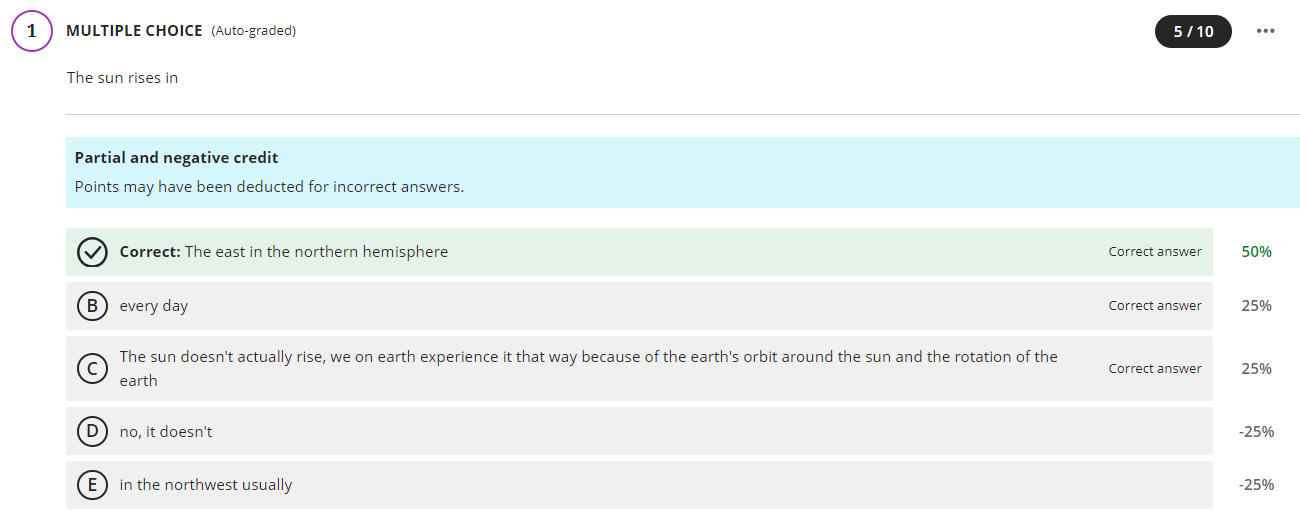
Partial or negative credit allows students to receive partial credit for answering part of the question correctly and negative credit for incorrect answers.
-
You can offer partial credit within a range of -100% to +100%.
-
If there are more incorrect answers than correct answers, students will not get a negative score unless Allow negative overall score is selected.
Example of multiple answer question with partial credit:
Allow negative overall score
-
Check Allow negative overall score if you would like to subtract points for incorrect answers. The intention here is to discourage guessing.
